

Project Introduction
The Naval Air Systems Command (NAVAIR) is a U.S. Navy command that provides lifecycle support for naval aircraft, weapons, and aviation systems used by the Navy and Marine Corps.
Project Introduction
The Naval Air Systems Command (NAVAIR) is a U.S. Navy command that provides lifecycle support for naval aircraft, weapons, and aviation systems used by the Navy and Marine Corps.
Project Brief
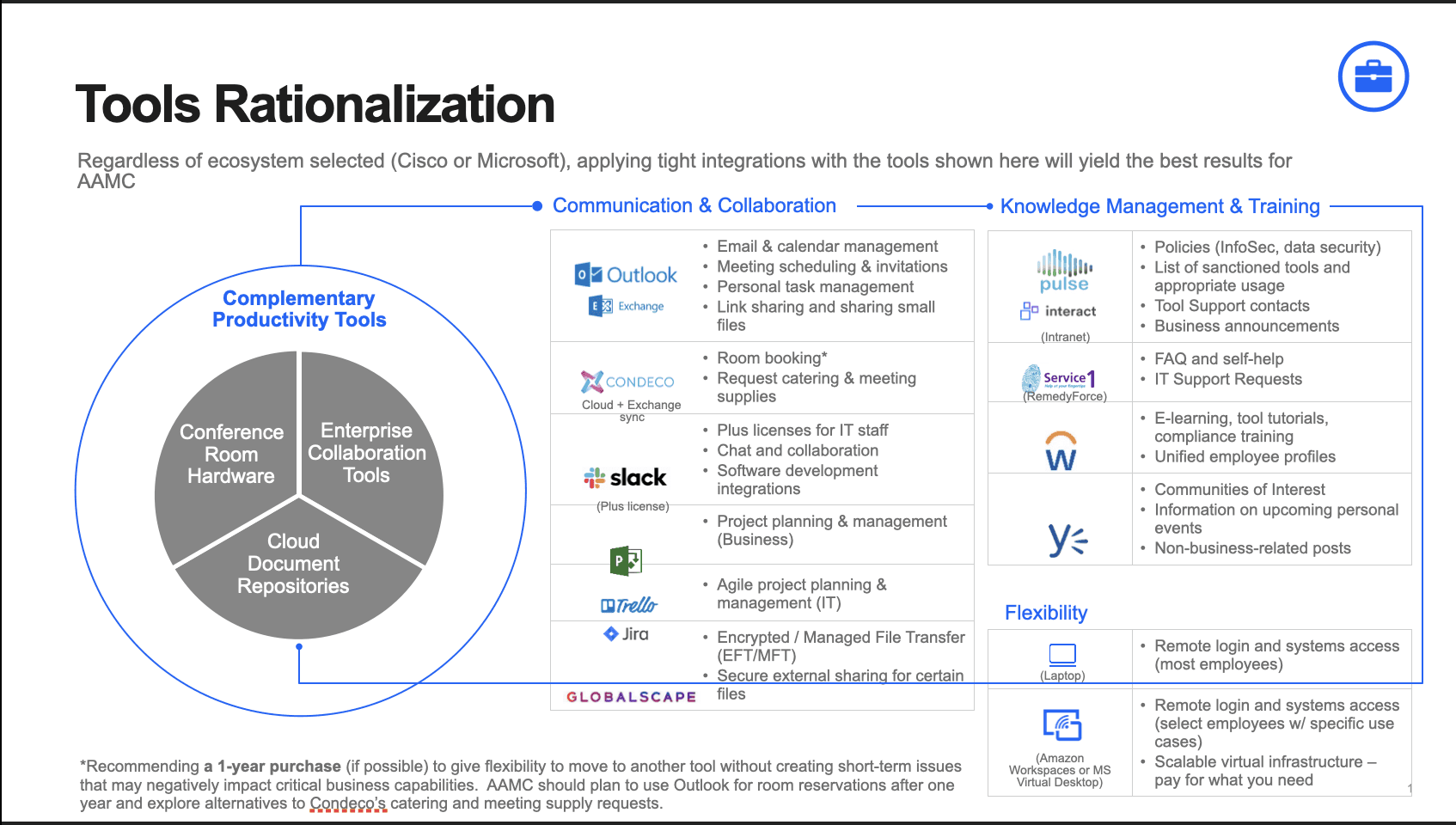
NAVAIR staff were using more than 50 different communication, file sharing, and collaboration tools - causing problems with governance, integration, security, and efficiency. Our project team was tasked to make specific recommendations for which workplace software and hardware to phase out, maintain or add.
Project Brief
NAVAIR staff were using more than 50 different communication, file sharing, and collaboration tools - causing problems with governance, integration, security, and efficiency. Our project team was tasked to make specific recommendations for which workplace software and hardware to phase out, maintain or add.
Project Focus
What’s the best way to account for everyone’s needs when deciding which tools to invest in?
Project Focus
What’s the best way to account for everyone’s needs when deciding which tools to invest in?
Project Solution
Our approach began with research that captured the needs of every team and role before making IT investment decisions.
Project Solution
Our approach began with research that captured the needs of every team and role before making IT investment decisions.
Interviews and Workshops 🗒️
“The fastest way to waste time and resources is to solve the wrong problem.”
Interviews and Workshops 🗒️
“The fastest way to waste time and resources is to solve the wrong problem.”
Interviews and Workshops 🗒️
“The fastest way to waste time and resources is to solve the wrong problem.”
1. Listening to understand
NAVAIR supports a wide range of services and products. We selected 35 people representing IT, Member/Constituent Services, project managers, and offshore vendors - deliberately seeking out a mix of tenure, work locations, and demographics, even from smaller teams.
I led semi-structured interviews focusing on the tools they use, the tasks they perform regularly, and who they collaborate with.
We also conducted two half day workshops with 30 participants - many not included in the interviews - to align on both the current state issues and a unified vision for the workplace of the future.
1. Listening to understand
NAVAIR supports a wide range of services and products. We selected 35 people representing IT, Member/Constituent Services, project managers, and offshore vendors - deliberately seeking out a mix of tenure, work locations, and demographics, even from smaller teams.
I led semi-structured interviews focusing on the tools they use, the tasks they perform regularly, and who they collaborate with.
We also conducted two half day workshops with 30 participants - many not included in the interviews - to align on both the current state issues and a unified vision for the workplace of the future.
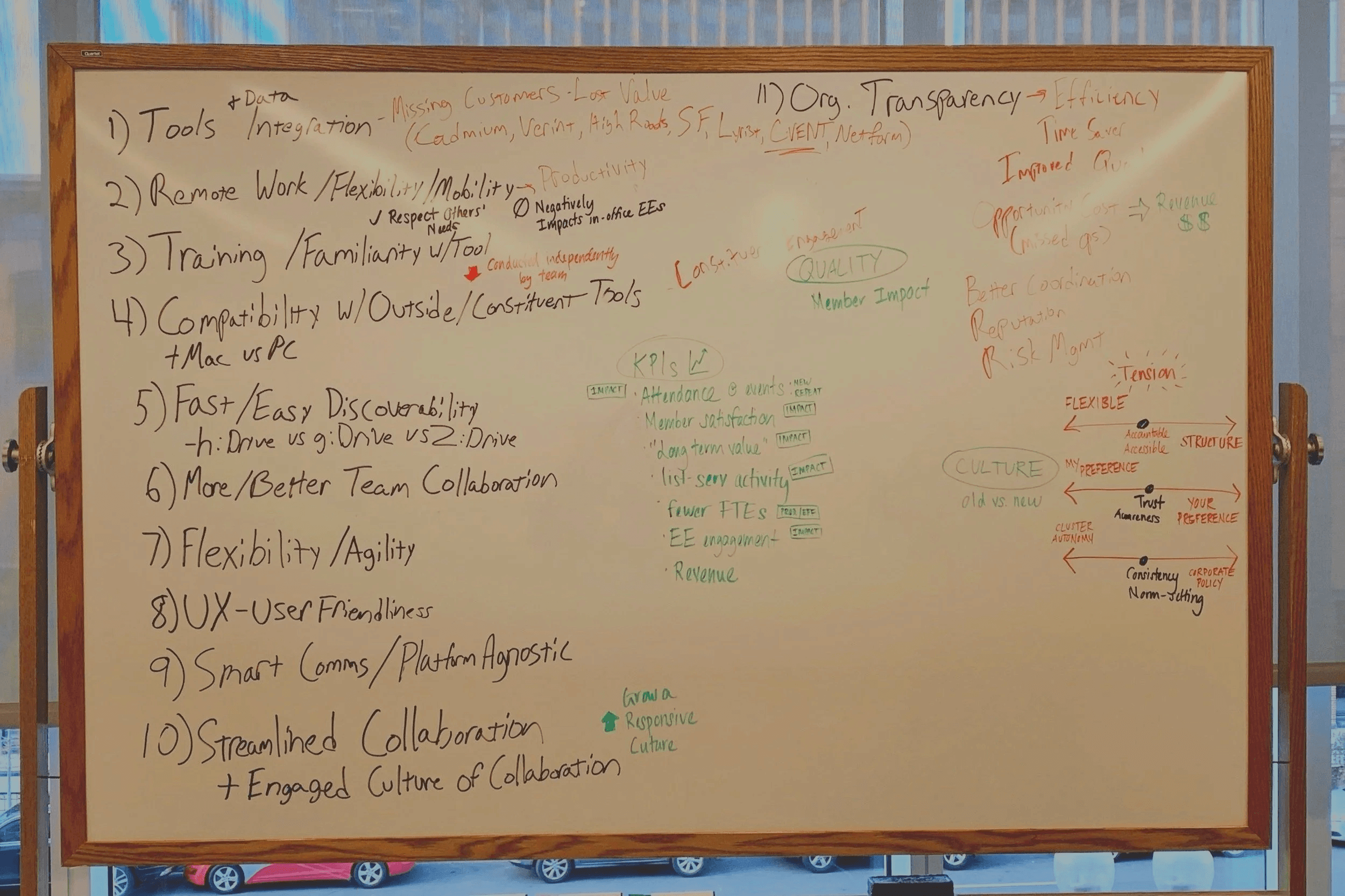
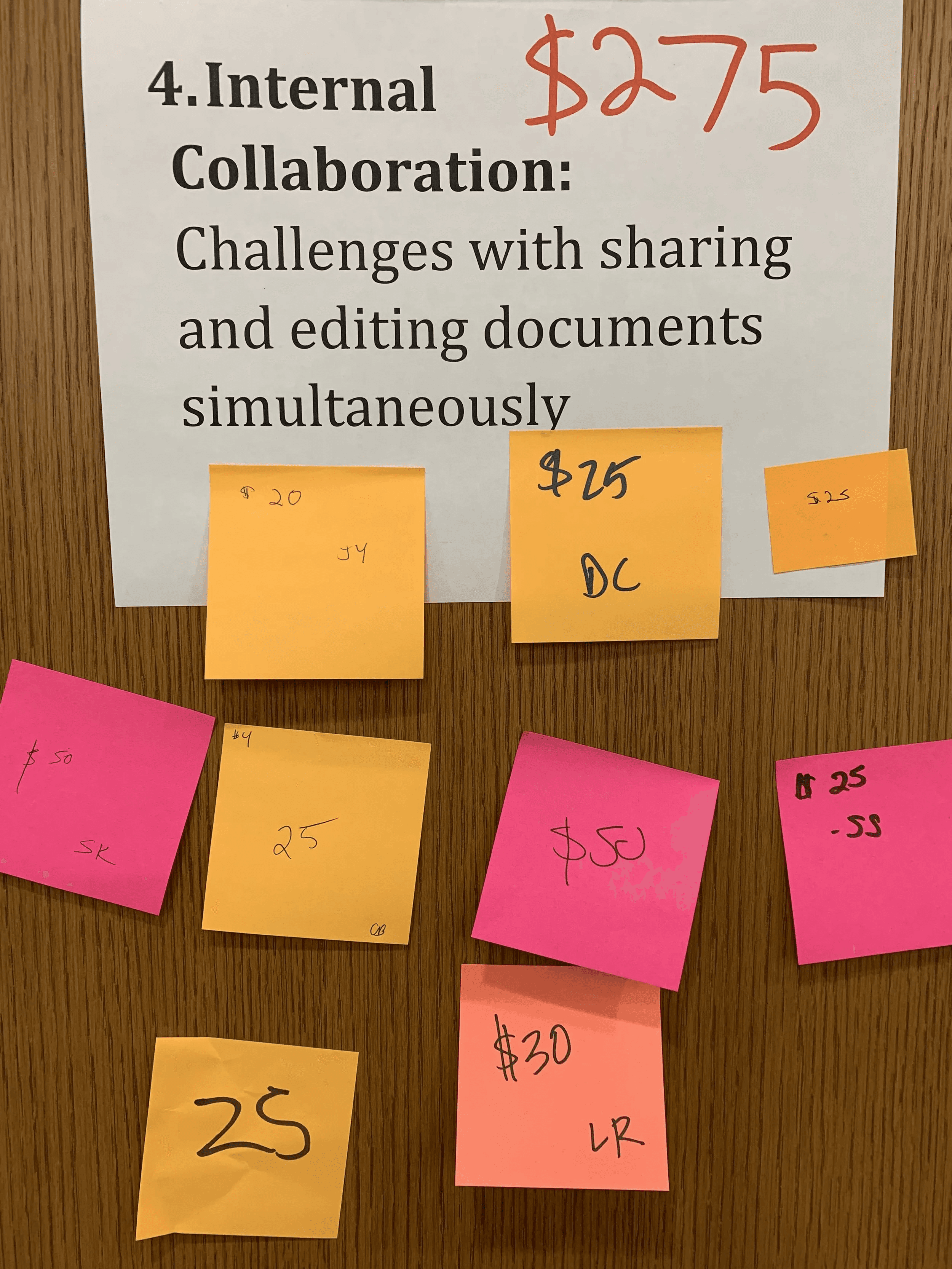
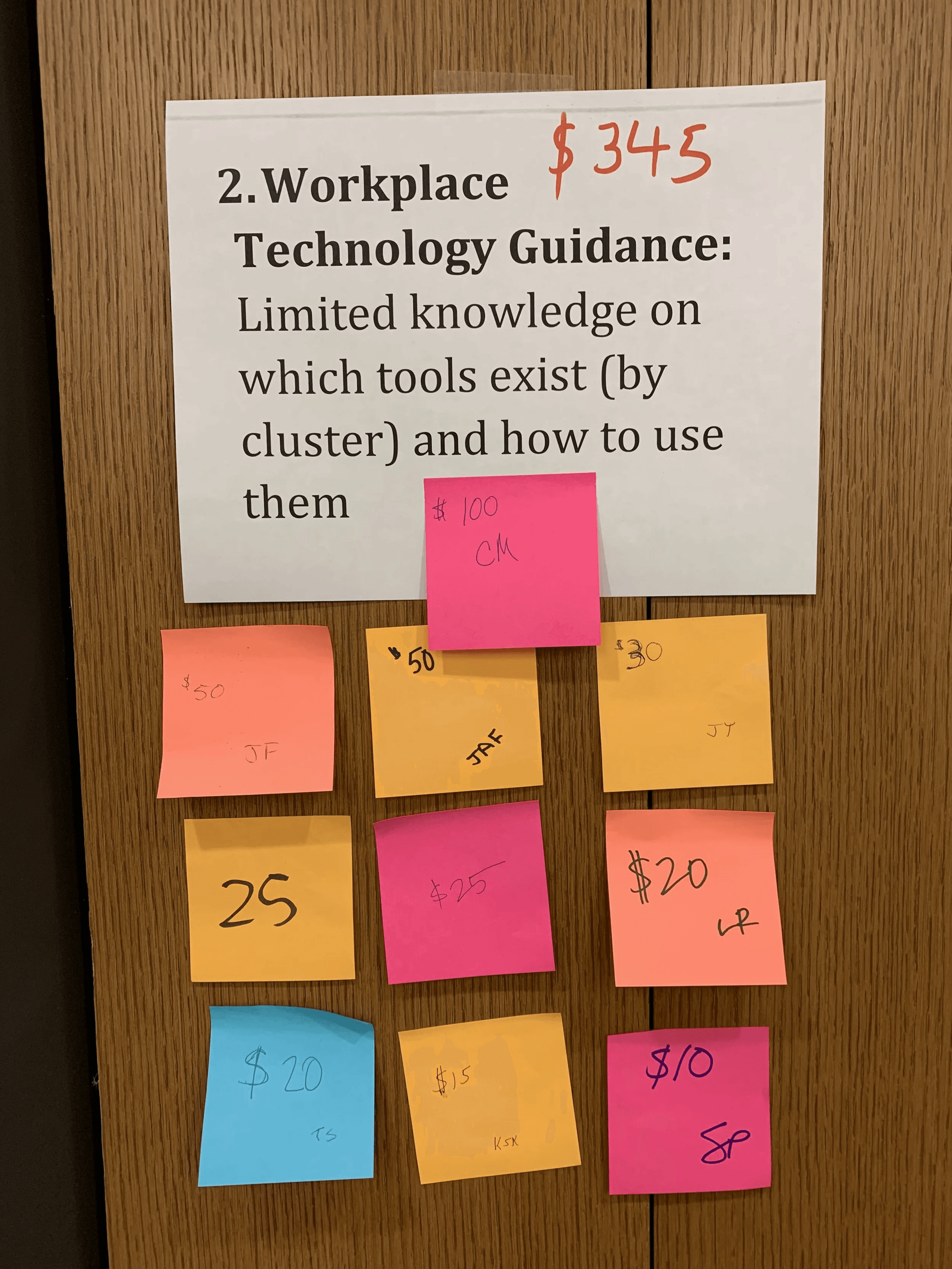
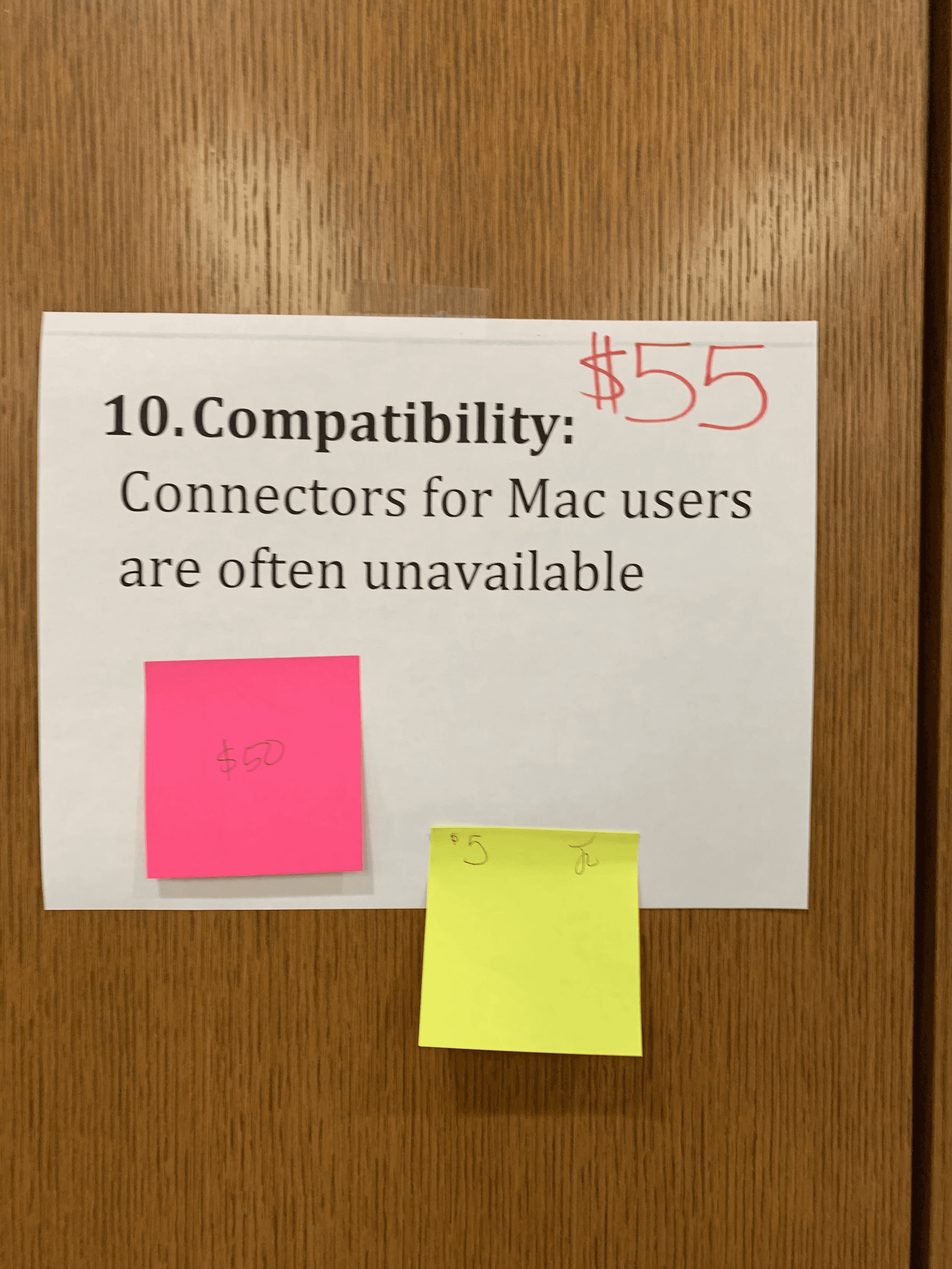
Results from the Buy a Feature exercise I selected to understand priorities
Results from the Buy a Feature exercise I selected to understand priorities
2. Getting everyone on the same page
2. Getting everyone on the same page
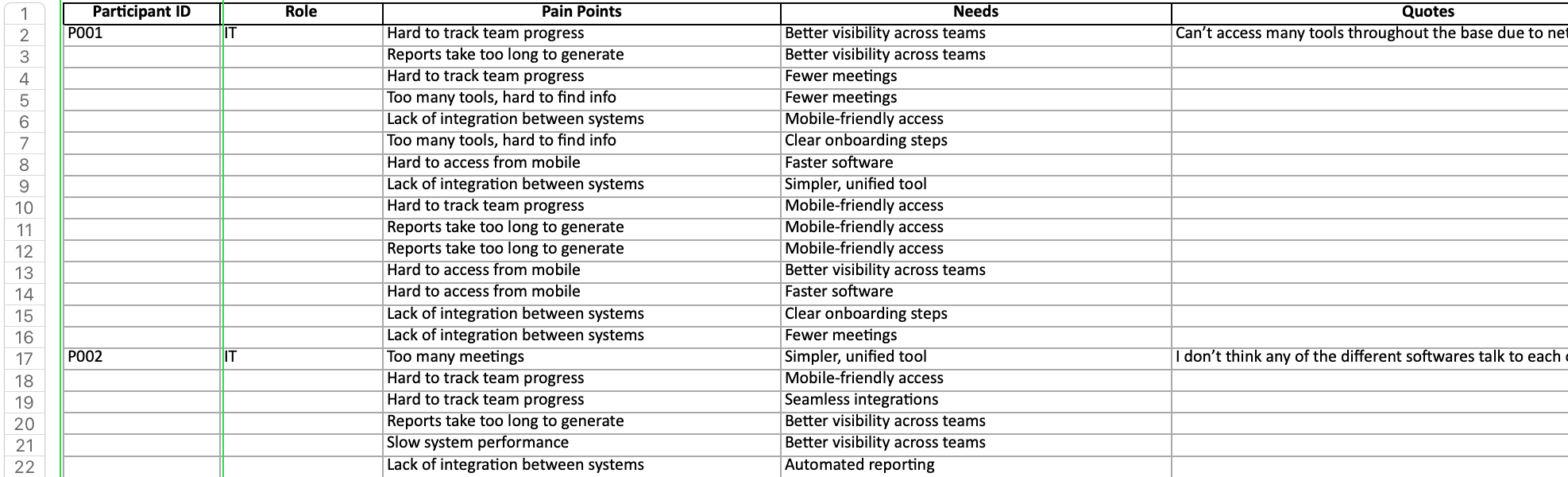
First, I condensed and consolidated the raw notes into Excel (~360 lines), and coded them as Actions, Opinions, or Perceptions. I also anonymized the respondents and applied a code to differentiate by role.
First, I condensed and consolidated the raw notes into Excel (~360 lines), and coded them as Actions, Opinions, or Perceptions. I also anonymized the respondents and applied a code to differentiate by role.
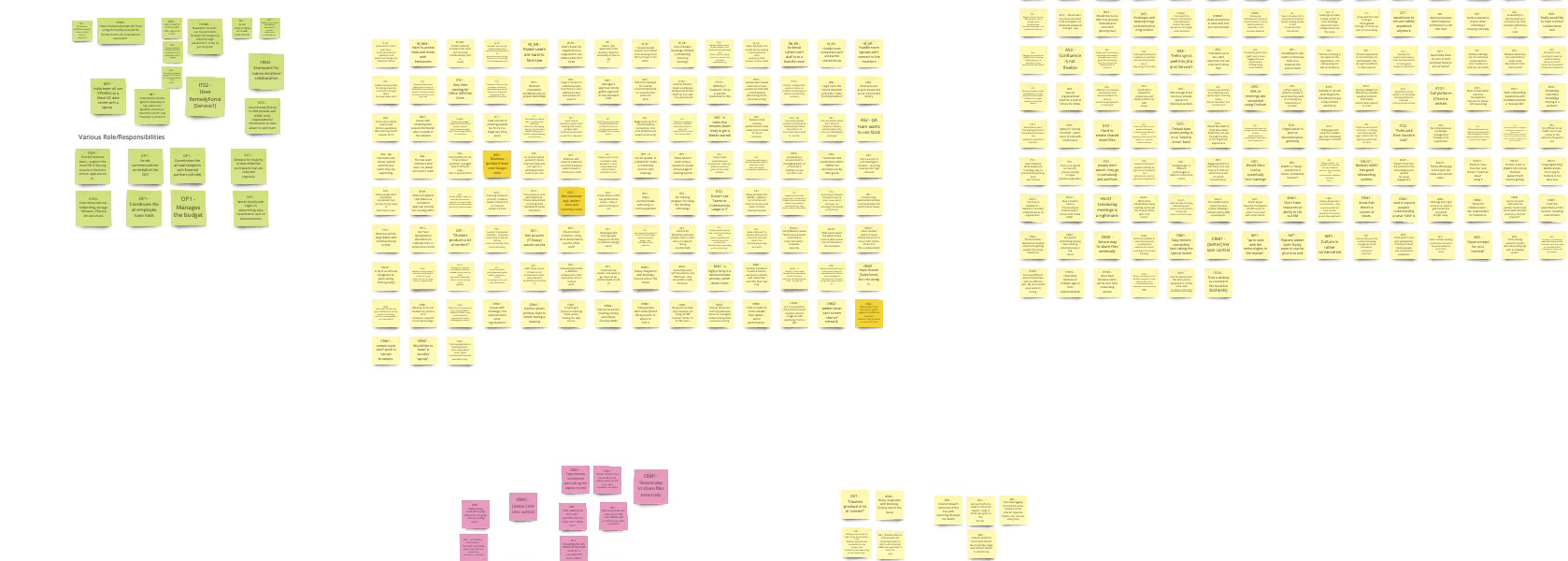
Second, I converted each data point from Excel into a sticky note in Mural. Mural I found to be a more digestible way for the project team to see. Organizing and labeling this data into meaningful groups helped bring clarity from all the notes from the user interviews and workshops.
Second, I converted each data point from Excel into a sticky note in Mural. Mural I found to be a more digestible way for the project team to see.
Organizing and labeling this data into meaningful groups helped bring clarity from all the notes from the user interviews and workshops.
Second, I converted each data point from Excel into a sticky note in Mural. Mural I found to be a more digestible way for the project team to see.
Organizing and labeling this data into meaningful groups helped bring clarity from all the notes from the user interviews and workshops.
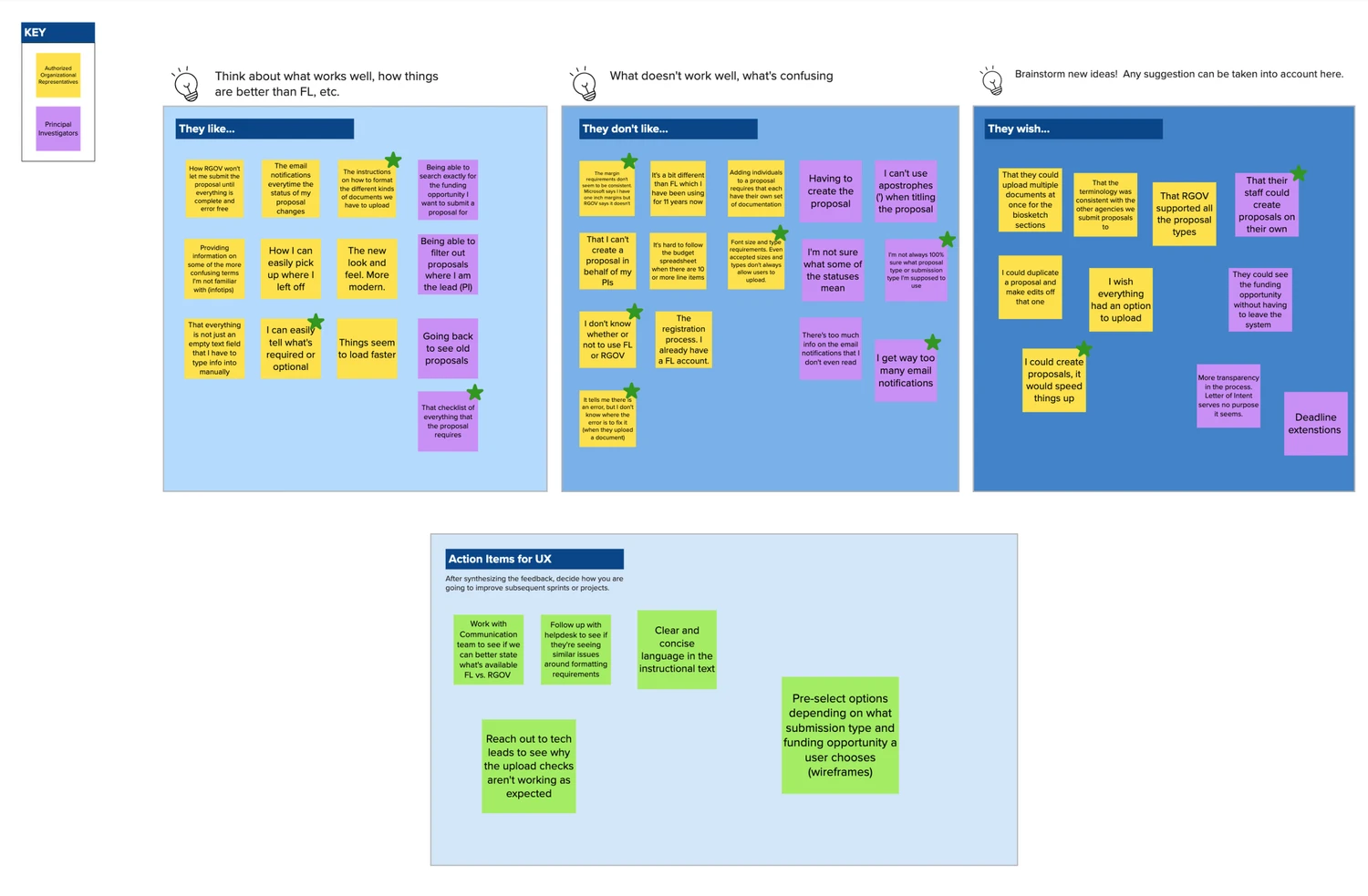
Lastly, I did the initial round of clustering of all the data into an affinity diagram that grouped user thoughts into 3 buckets: What works, what doesn't work, and new ideas. After I had done my first round of clustering, I asked the rest of the project team to do a virtual “walk the wall” to add their own insights, comments, or questions.
Lastly, I did the initial round of clustering of all the data into an affinity diagram that grouped user thoughts into 3 buckets: What works, what doesn't work, and new ideas.
After I had done my first round of clustering, I asked the rest of the project team to do a virtual “walk the wall” to add their own insights, comments, or questions.
Lastly, I did the initial round of clustering of all the data into an affinity diagram that grouped user thoughts into 3 buckets: What works, what doesn't work, and new ideas.
After I had done my first round of clustering, I asked the rest of the project team to do a virtual “walk the wall” to add their own insights, comments, or questions.
Key Themes
Key Themes
Key themes
1) "Folks pick their favorite tools"
Through the interviews and workshops, we learned about the inconsistent governance of sourcing software and installing on local machines. This caused two big problems:
Confusion over which tools to use for which tasks, and a proliferation of tools with similar functions.
Lack of IT support and security for downloaded apps. People who were frustrated with the approval process for a new tool simply installed it themselves.
1) "Folks pick their favorite tools"
Through the interviews and workshops, we learned about the inconsistent governance of sourcing software and installing on local machines. This caused two big problems:
Confusion over which tools to use for which tasks, and a proliferation of tools with similar functions.
Lack of IT support and security for downloaded apps. People who were frustrated with the approval process for a new tool simply installed it themselves.
2) "Teleworking is a privilege"
There were known issues with system performance and hardware when teleworking. While the interviews and workshops confirmed and gave details about the origin and impact of the tooling problems, we also learned more about the cultural barriers to working from home effectively.
Participants mentioned that leaders believe being in person means being productive, and that managers will default to doing thing the ways they’ve always been done.
2) "Teleworking is a privilege"
There were known issues with system performance and hardware when teleworking. While the interviews and workshops confirmed and gave details about the origin and impact of the tooling problems, we also learned more about the cultural barriers to working from home effectively.
Participants mentioned that leaders believe being in person means being productive, and that managers will default to doing thing the ways they’ve always been done.
3) "Focus on capabilities"
The Business Strategy lead on the team defined “Workforce productivity” into four capability areas: Communication, Collaboration, Knowledge Management and Training, and Workplace Flexibility. This was a useful schema for aggregating all of the insights and informed my designs for the personas and journey maps.
3) "Focus on capabilities"
The Business Strategy lead on the team defined “Workforce productivity” into four capability areas: Communication, Collaboration, Knowledge Management and Training, and Workplace Flexibility. This was a useful schema for aggregating all of the insights and informed my designs for the personas and journey maps.
Deliverables 🗂️
“Let's turn these research insights into something tangible that teams can align around”
Deliverables 🗂️
“Let's turn these research insights into something tangible that teams can align around”
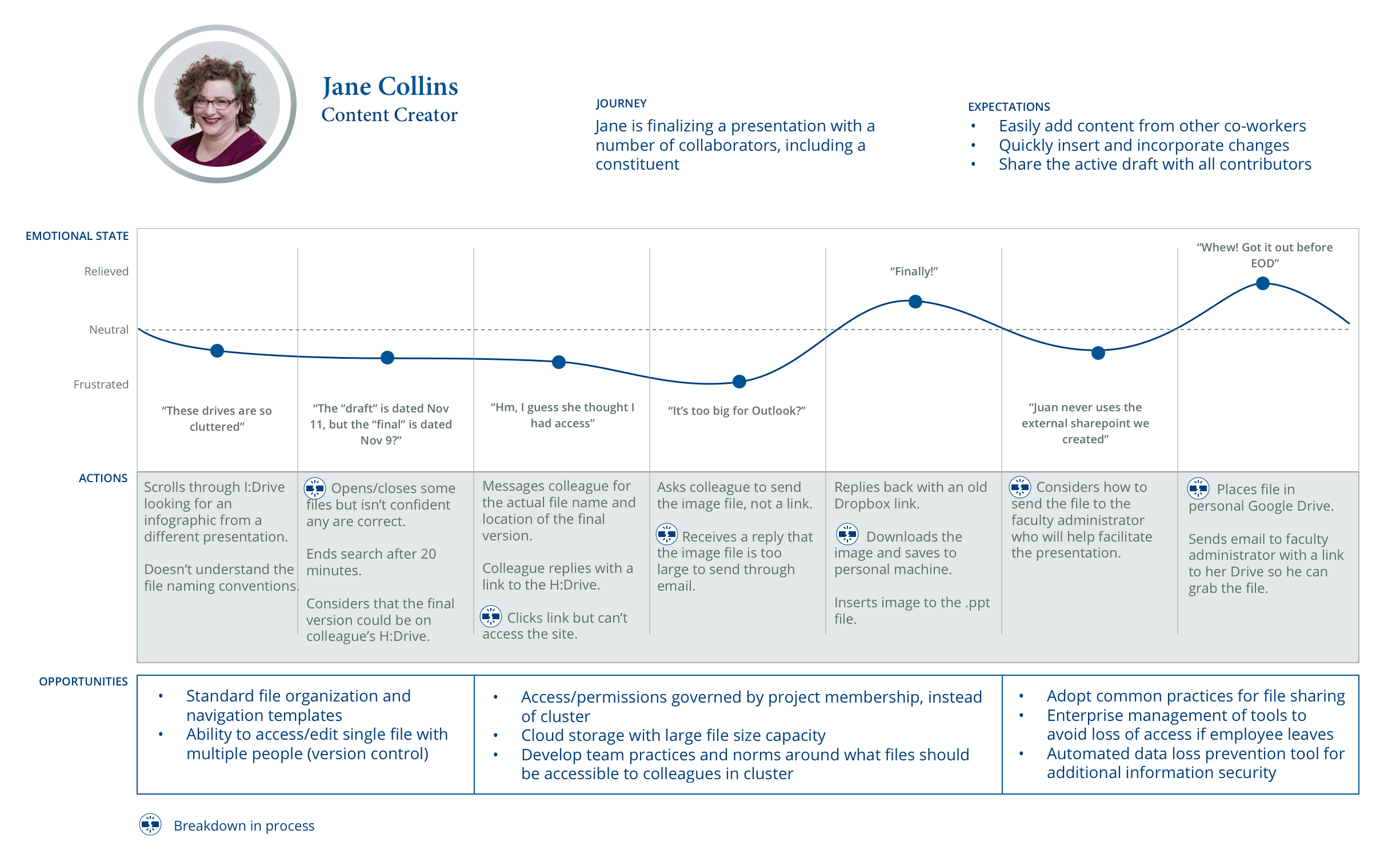
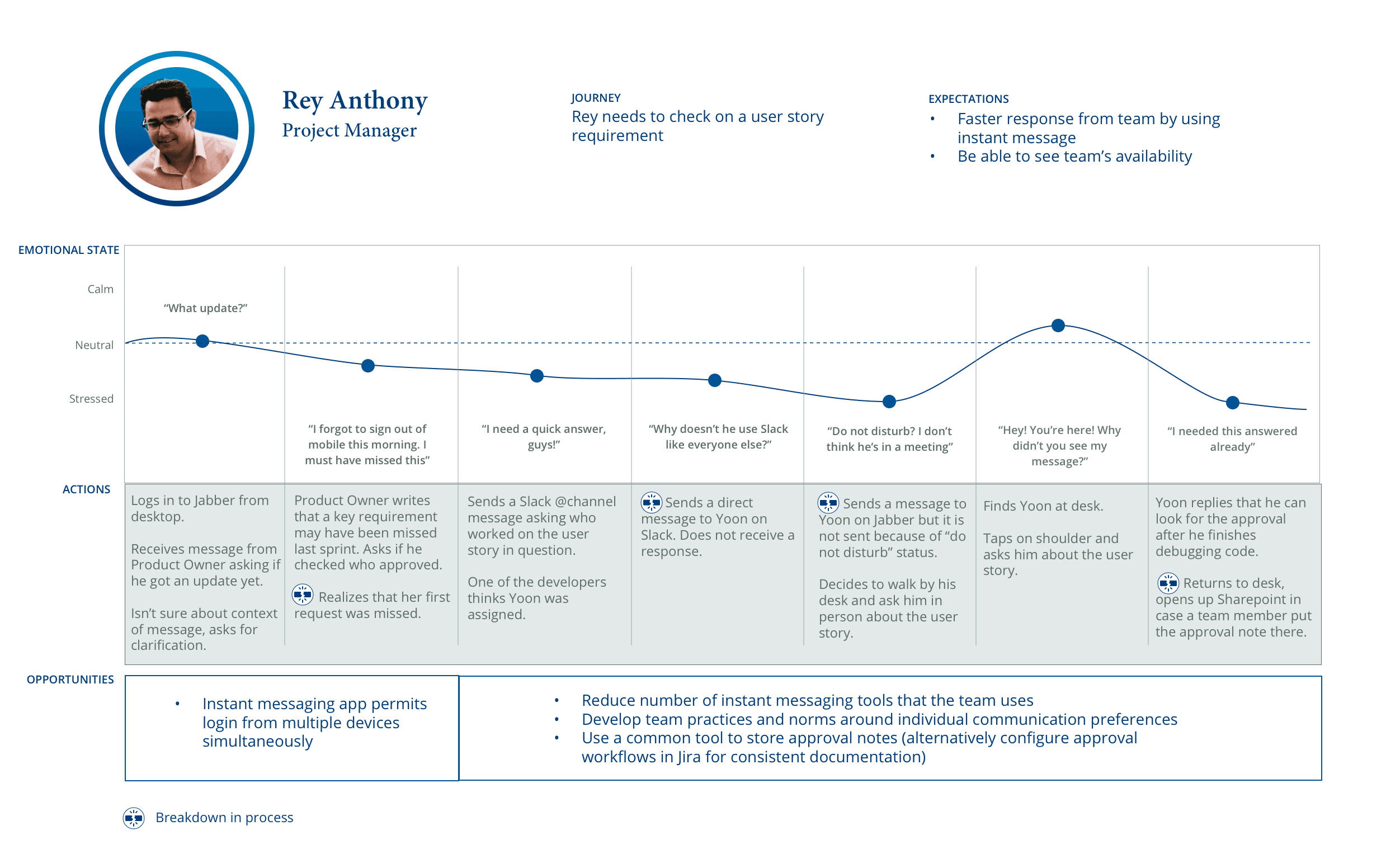
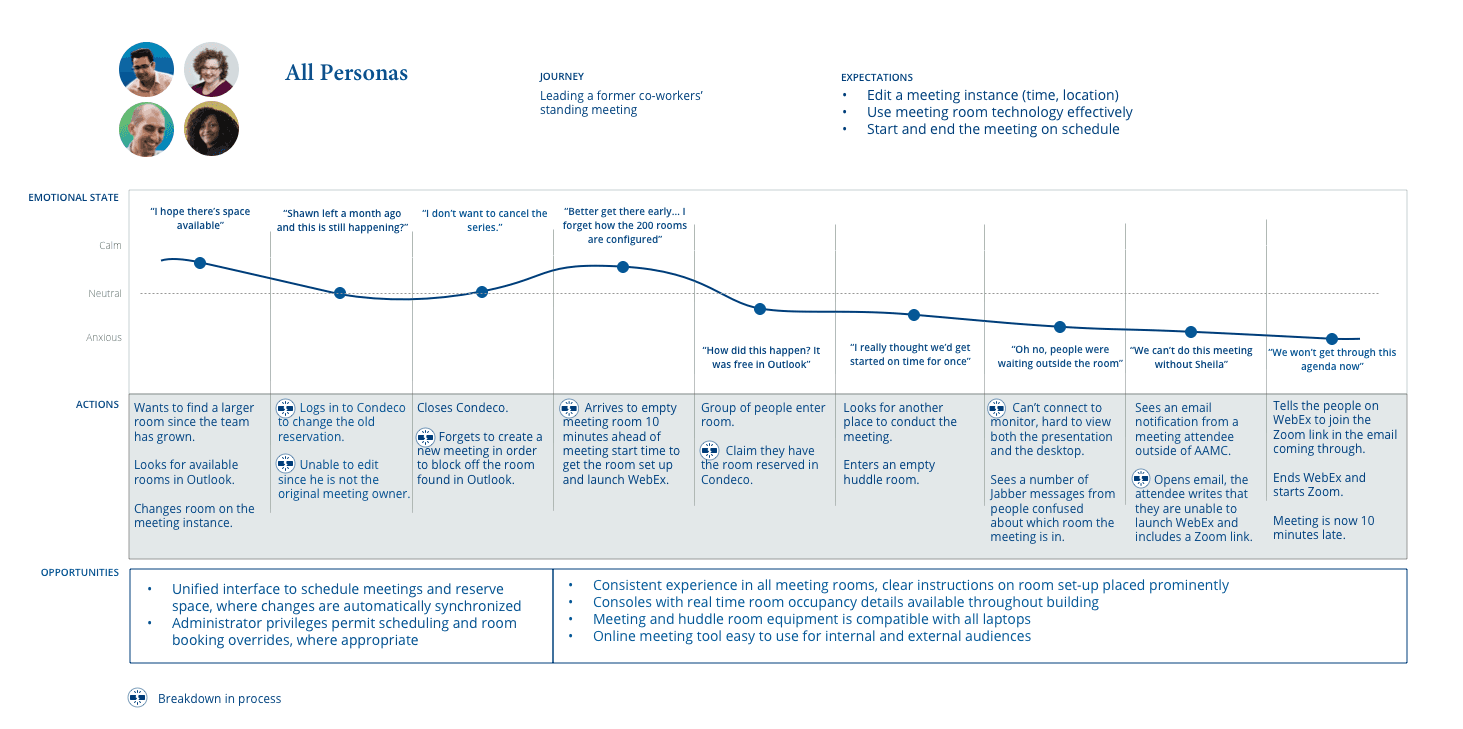
Personas and Journey Maps
Instead of centering the personas and journey maps based on role, I chose to build them around capabilities. I did this in order to:
Break down silos. We often heard about the differences in how departments and divisions worked, which gave the perception that problems were more localized than they really were.
Justify recommendations. By focusing on the universal pain points, the project team could more easily advocate for a streamlined set of tools and software for AAMC.
Personas and Journey Maps
Instead of centering the personas and journey maps based on role, I chose to build them around capabilities. I did this in order to:
Break down silos. We often heard about the differences in how departments and divisions worked, which gave the perception that problems were more localized than they really were.
Justify recommendations. By focusing on the universal pain points, the project team could more easily advocate for a streamlined set of tools and software for AAMC.
Collaborator
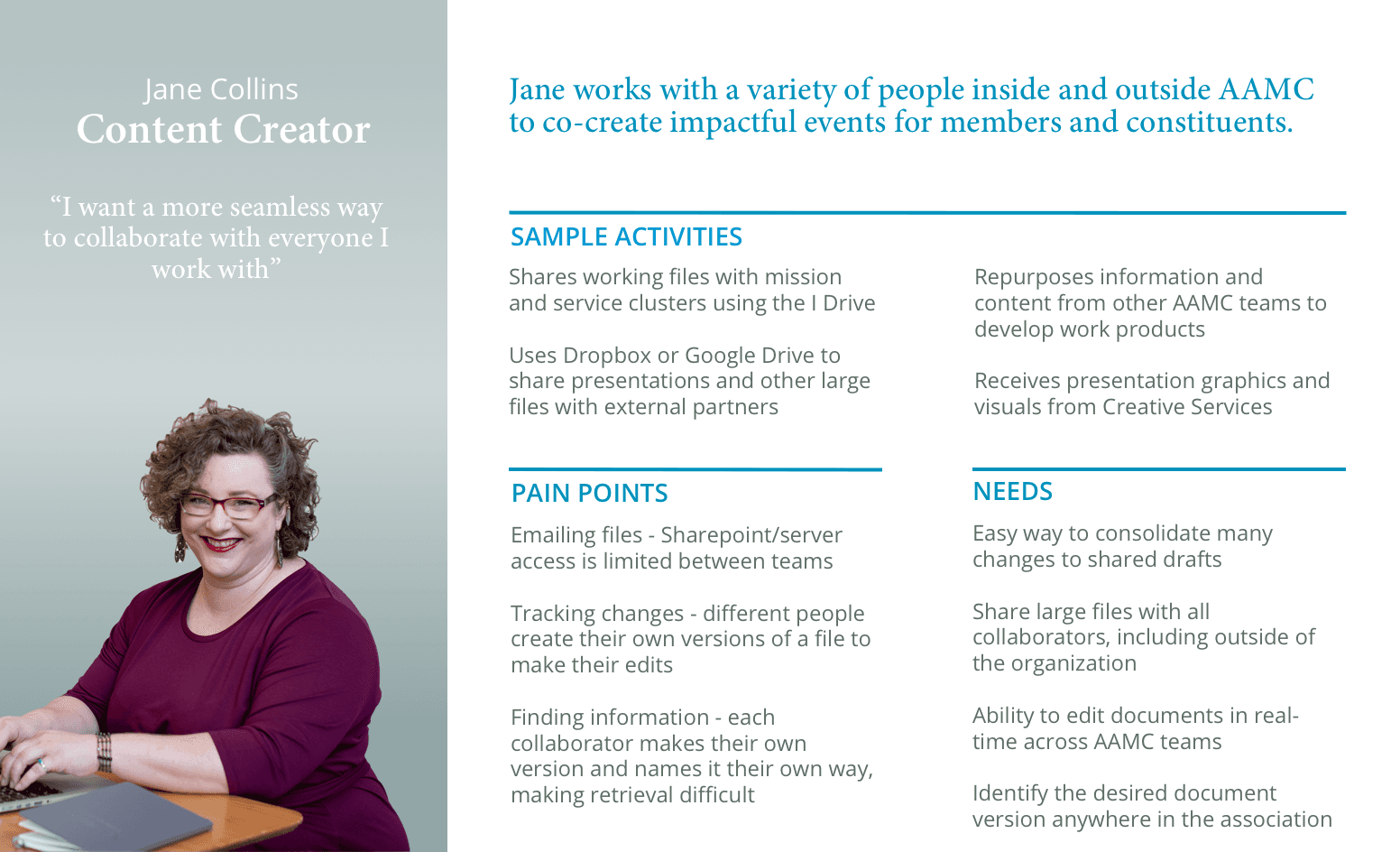
Jane, the Content Creator, represented the people who often share files and work with external partners.
Collaborator
Jane, the Content Creator, represented the people who often share files and work with external partners.

Paige Turner
Content Strategist
“I want to collaborate with everyone easily”
Paige Turner writes and edits publications used both internally and externally
Paige Turner
Expectations
Content Strategist
Easily add content and share the working draft to all contributors

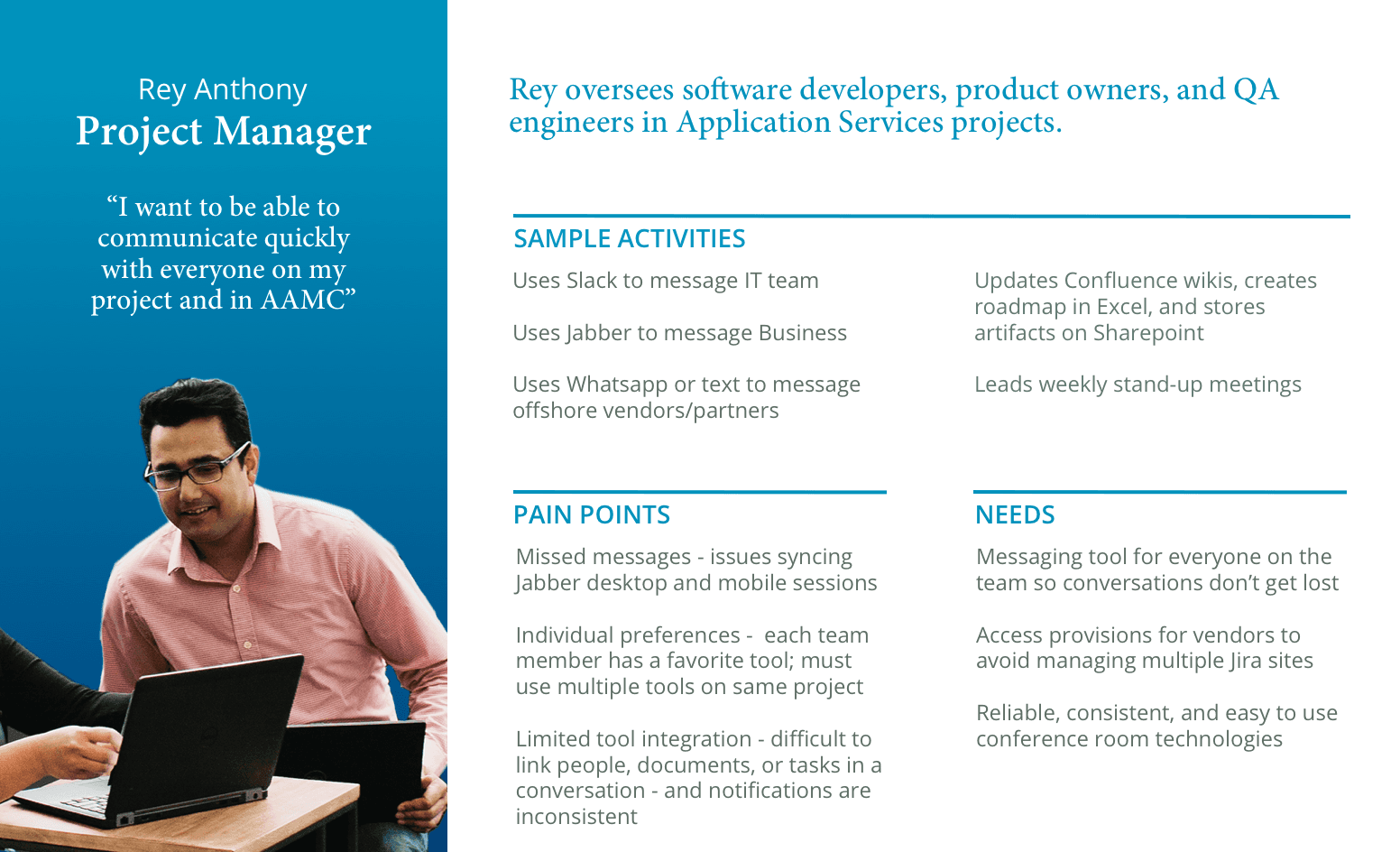
Communicator
Rey, the Project Manager, is a persona representing the people who work cross-functionally in AAMC.
Communicator
Rey, the Project Manager, is a persona representing the people who work cross-functionally in AAMC.

Project Manager
Garret Flow
“I want to communicate with everyone quickly”
Garret Flow oversees software engineers, product owners, and QA engineers

Garret Flow
Expectations
Project Manager
Communicate with team via messaging, see the team’s availability and bandwith
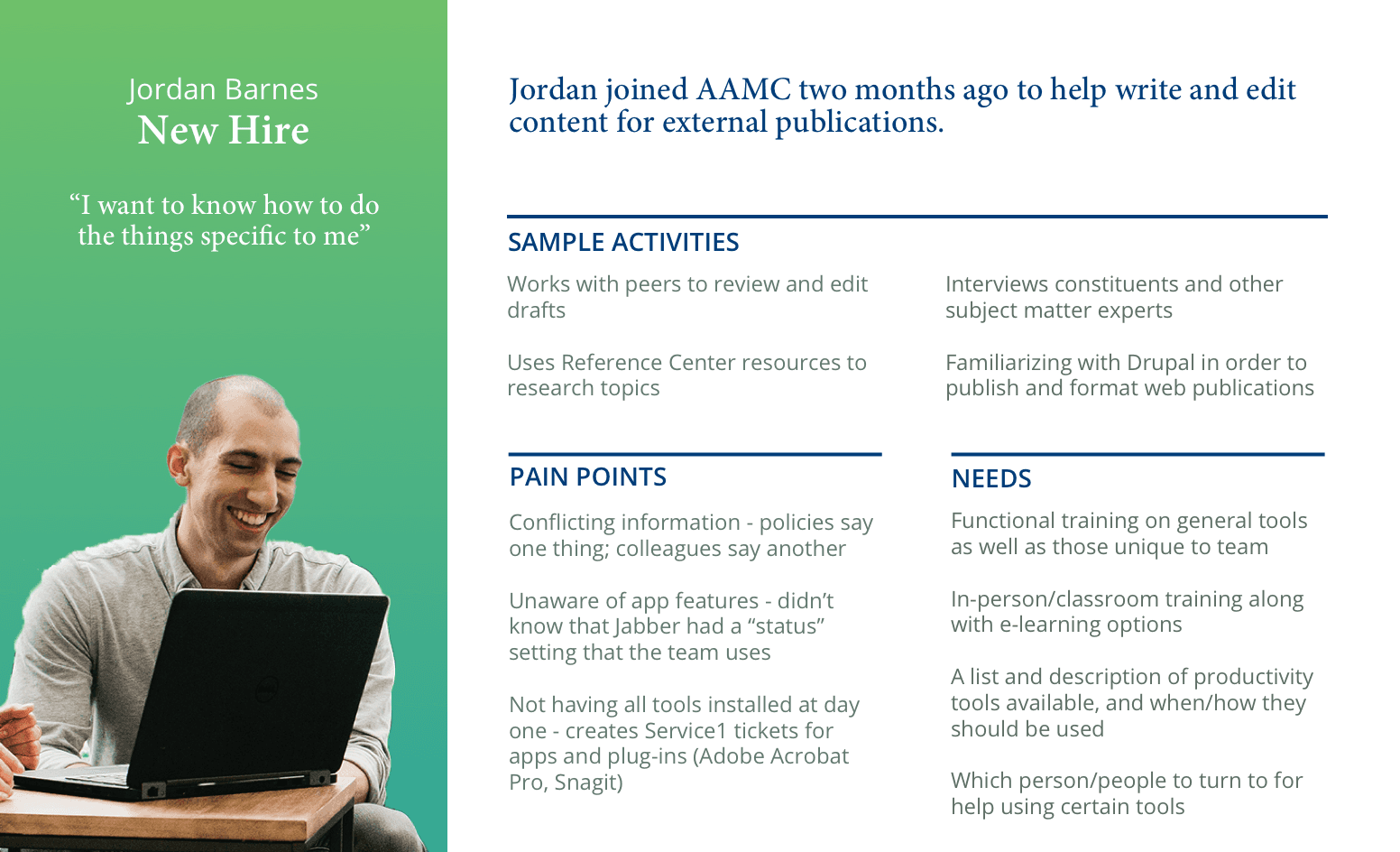
Knowledge Management and Training
Jordan is a New Hire, and represents the issues that all staff have with training and institutional knowledge sharing, regardless of tenure.
Knowledge Management and Training
Jordan is a New Hire, and represents the issues that all staff have with training and institutional knowledge sharing, regardless of tenure.

New Hire
Hope Start
“I want to hit the ground running if possible”
Hope Start joined 2 months ago to help create improvement processes to their procuring operations
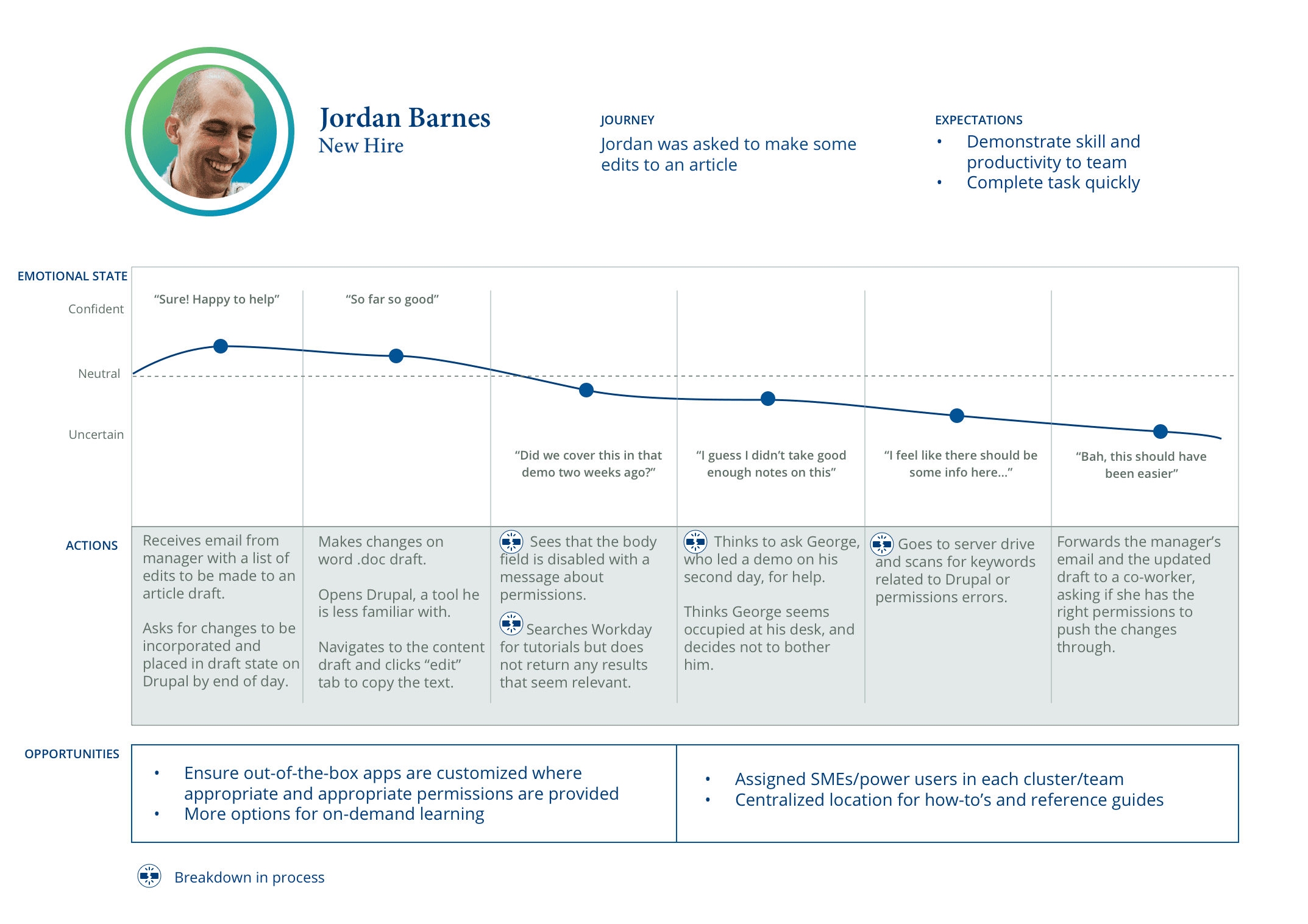

Hope Start
Expectations
New Hire
Create improvement processes to their procuring operations
Workplace Flexibility
Alesha is an Analyst representing the issues common for remote workers.
Workplace Flexibility
Alesha is an Analyst representing the issues common for remote workers.
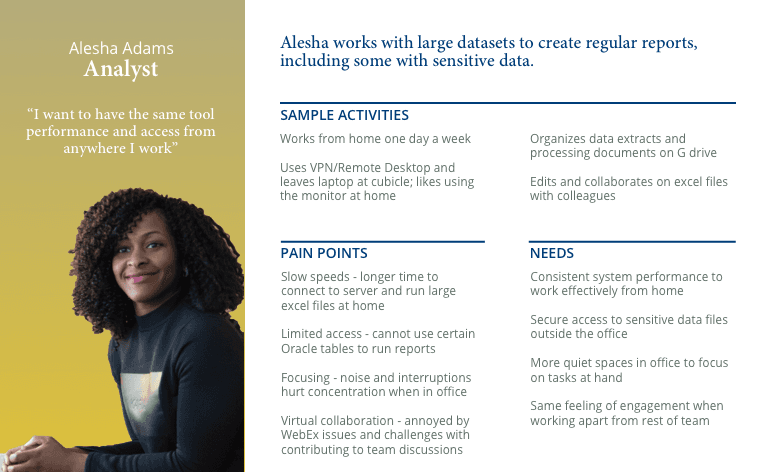

Analyst
Rohan Query
“I want to have access to my workspace while out of office”
Rohan Query works with large datasets to create reports, including some with sensitive data.
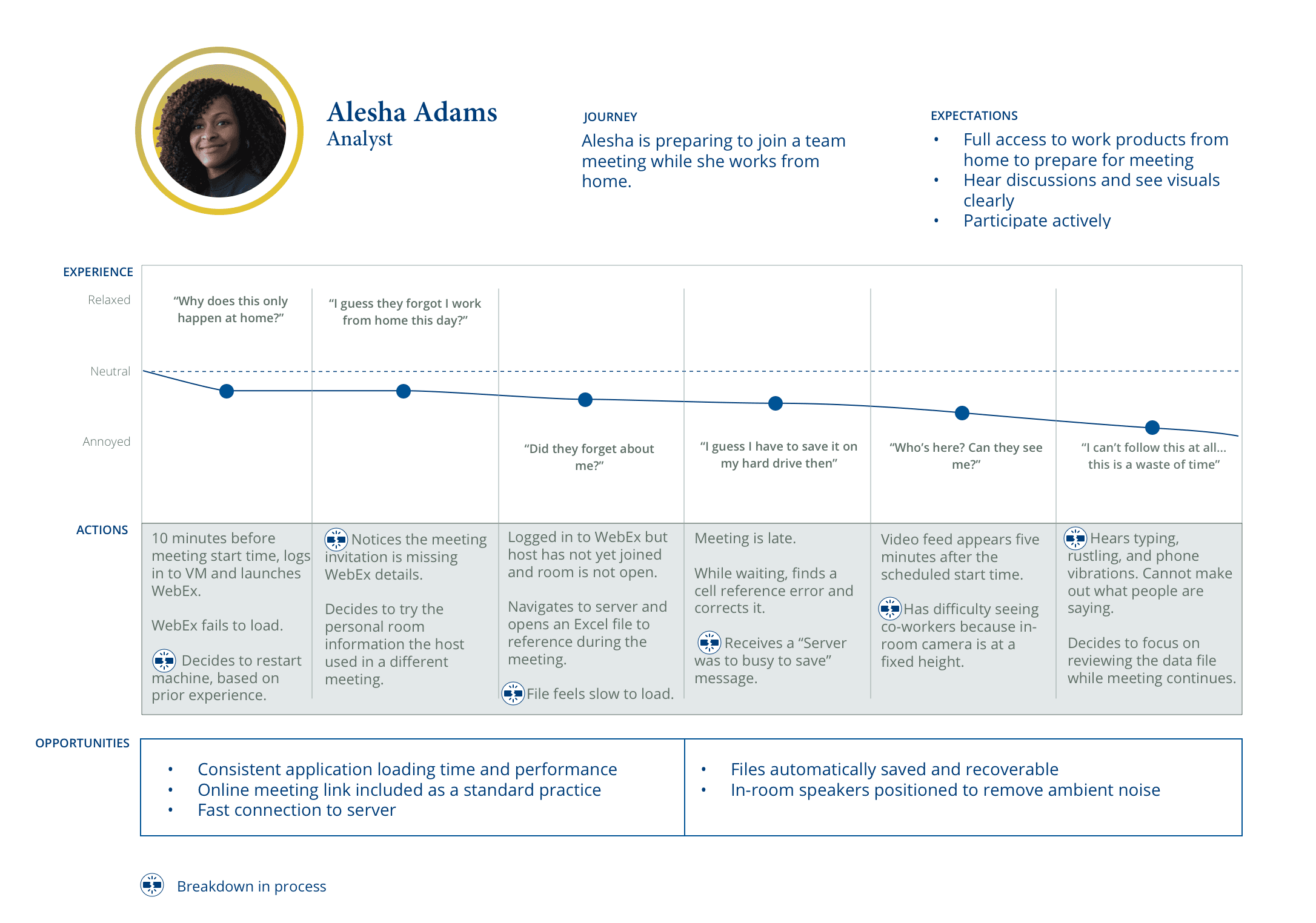

Rohan Query
Expectations
Analyst
Create reports with sensitive data from his remote location




Impact 🎉
"Focus on the process, and the outcome will take care of itself."
Impact 🎉
"Focus on the process, and the outcome will take care of itself."
Building journey maps and personas made sharing results with our project sponsor and the department heads more clear and memorable. The themes and insights I surfaced from the research influenced which tools were recommended for the roadmap.
The implementation roadmap’s five year calculated savings to NAVAIR (total cost of ownership) was $4.7 million.
Building journey maps and personas made sharing results with our project sponsor and the department heads more clear and memorable. The themes and insights I surfaced from the research influenced which tools were recommended for the roadmap.
The implementation roadmap’s five year calculated savings to NAVAIR (total cost of ownership) was $4.7 million.
Next steps:
Work with developers and QA to help oversee the UI implementation of pages that are being developed
Work with business analysts and stakeholders on the next feature on the product roadmap
Work with UX team to work on any ad hoc requests from other departments and to contribute to our design system and design guidelines
Work with UX team and tech leads to address performance issues that may need new design solutions.
Next steps:
Work with developers and QA to help oversee the UI implementation of pages that are being developed
Work with business analysts and stakeholders on the next feature on the product roadmap
Work with UX team to work on any ad hoc requests from other departments and to contribute to our design system and design guidelines
Work with UX team and tech leads to address performance issues that may need new design solutions.